
The Beginner's Guide to Wealth Building & Asset Protection
The Beginner's Guide to Wealth Building & Asset Protection

You do not need to be rich to start building wealth. You need a plan and the discipline to protect what you build along the way.
Why "Wealth Building" Feels So Confusing
Ask ten people what "building wealth" means and you'll get ten different answers, stocks, real estate, side hustles, "passive income." No wonder so many people freeze before they even start.
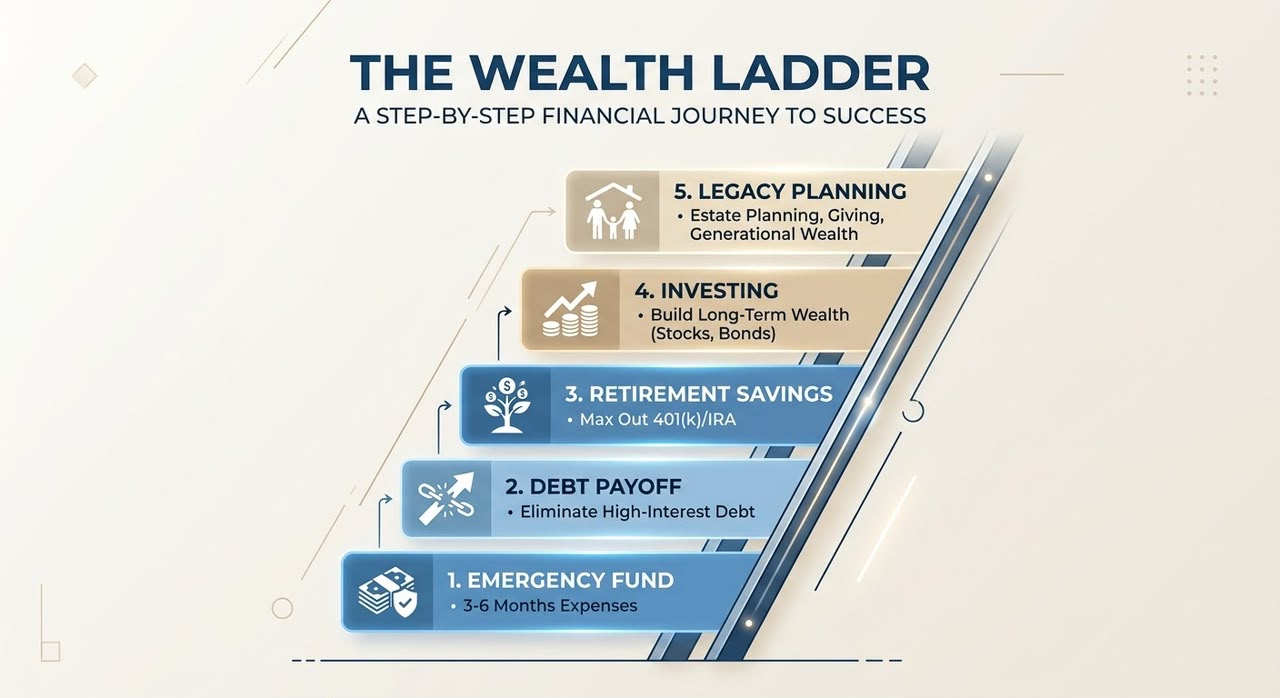
Here's the truth: wealth building isn't a secret formula. It's a sequence. Skip a step, and everything after it gets shakier. Get the order right, and each stage makes the next one easier.
This guide walks through that sequence, plus the protection piece most beginners skip until it's too late.
Stage 1: Know Your Number
Before you can grow anything, you need an honest picture of where you actually stand.
- Track every dollar in and out for 30 days, no judgment, just data.
- Calculate your net worth: everything you own, minus everything you owe. This is your true starting line.
- Spot your "leaks", subscriptions, fees and spending that quietly drift away from your goals.
> 💡 Beginner tip: Most people overestimate what they save and underestimate what they spend. The number doesn't lie, write it down before you do anything else.

Stage 2: Build Your Foundation
Wealth building without a safety net is just gambling with extra steps. Before investing a single dollar, most people benefit from building two things, in order:
1. A starter cushion, enough to cover a surprise expense without reaching for a credit card.
2. A full emergency fund, typically 3–6 months of essential expenses, kept somewhere safe and accessible, not tied up in investments.
This fund isn't about earning the highest return. It's about buying yourself options, so a job loss, medical bill, or car repair doesn't undo years of progress in a single month.
Stage 3: Grow It: Understanding Your Options
Once your foundation is solid, it's time to put money to work. Most beginners will run into a handful of familiar paths:
- Retirement concepts; long-term strategies for growing capital over time.
- Investment accounts; flexible options for goals beyond retirement.
- Real estate; a long-term wealth path with its own risks, costs, and learning curve.
- Your own income; skills, side income, business guidance, and career growth are often the fastest levers a beginner can pull.
We're keeping this section conceptual on purpose: the "best" path depends entirely on your goals, timeline, and risk tolerance. A generic list can't know your situation, that's exactly where a real conversation with someone who knows your full picture beats another internet article.
Stage 4: Protect What You're Building
Here's the stage beginners skip, and the one that determines whether your progress actually sticks.
Wealth you can't protect isn't really wealth. It's exposure.
- Insurance as a foundation, not an afterthought. Life, health, and supplemental insurance products exist so one unexpected health or life event doesn't erase years of hard work. As licensed insurance producers, we help you select the right protection for your family.
- Beneficiary designations. Many people set these once, at account opening, and never revisit them, even after marriage, divorce, or having kids. An outdated form can quietly override an otherwise perfect plan.
- Legacy and estate basics. You don't need to feel "wealthy" to need a plan for what happens if something happens to you. Even simple documents can prevent confusion and conflict later.
- Emergency documentation. Make sure a trusted person actually knows where your accounts, policies, and key documents live.
> ⚠️ Common blind spot: People assume protection can wait until there's "more money." In reality, it matters more as your assets grow, not less.

Stage 5: Build a Rhythm, Not a One-Time Plan
The families who build real wealth aren't the ones who get everything perfect on day one, they're the ones who review and adjust consistently.
- ✅ Monthly: Check spending against your plan.
- ✅ Quarterly: Review savings and financial progress.
- ✅ Annually: Revisit insurance coverage, beneficiaries, and big-picture goals.
- ✅ After major life events: Marriage, kids, a home purchase, a career change — always revisit the plan.
A plan that's reviewed once a year will consistently outperform a "perfect" plan that's never revisited at all.
The 5 Most Common Beginner Mistakes
1. Investing before building an emergency fund: leaves you exposed to selling at the worst possible time.
2. "Set it and forget it" beneficiaries: outdated forms can override even the best will.
3. Confusing insurance with investing: they solve two very different problems.
4. Waiting for "enough money" to start: the habit matters more than the amount, especially early on.
5. Going it completely alone: a second set of eyes catches blind spots you can't see from inside your own finances.
Your Next Step
Building wealth is simple in concept and hard in execution — mostly because nobody teaches us this in school. The good news: you don't have to figure it all out alone, and you don't need it all figured out before you start.
Ready to build a plan that actually fits your life?
👉 [Work With Our Team]
Let's map out where you are, where you want to go, and what's standing in between.
This article is for general educational purposes only and does not constitute personalized investment, legal, or tax advice. Lumière Financial Services / Lumiere Wealth Group is a licensed insurance producer in applicable jurisdictions. While we provide financial coaching, business guidance, and insurance solutions, we are not a registered investment adviser, broker-dealer, law firm, or accounting/tax preparation firm. Please consult a qualified licensed professional before making financial decisions specific to your situation.